
Academics Overview
Rigorous undergraduate curriculum harmonizing foundational computer concepts, programming logic, and practical application.
Bridging Concepts and Practice
Our academic model is structured to guide students from computational fundamentals to applied software and web concepts.
At Doon College of Higher Education, we recognize that true competence in computer applications requires both depth in logical foundations and constant hands-on practice. Our pedagogy integrates classroom lectures with regular laboratory assignments, encouraging students to analyze algorithmic problems, write executable code, manage data structures, and understand system architectures.
Key Areas of Learning
Essential subject pillars covered throughout the 3-year undergraduate course.
Undergraduate Education
Fosters academic maturity, analytical mindset, documentation abilities, and mathematical grounding required for higher computing disciplines.
Computer Applications
Comprehensive understanding of operating systems, hardware architectures, system software utilities, and user application environments.
Programming Fundamentals
Algorithmic problem-solving, structured programming principles, object-oriented concepts, and implementation in procedural and modern languages.
Database Management
Relational data modeling, Entity-Relationship diagrams, Structured Query Language (SQL), indexing, transactions, and data integrity.
Web Technologies
Client-side markup with HTML5, CSS3 stylesheet styling, JavaScript interactivity, responsive design principles, and web standards.
Software & IT Skills
Software development lifecycle models, requirement analysis, software testing concepts, networking protocols, and professional IT ethics.
Practical Computer Learning
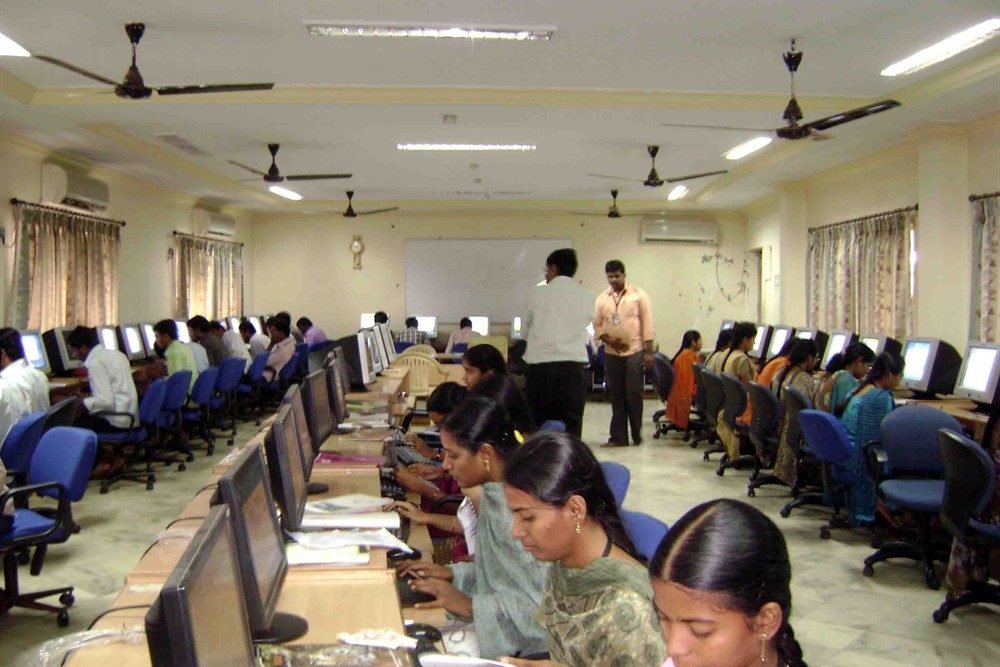
Computer education achieves its full value when students actively code and test their programs. Our instructional plan mandates scheduled laboratory hours corresponding to every theoretical module. Under the supervision of academic faculty, students practice writing algorithms, debugging code errors, executing queries, and building software demonstrations.
Hands-on Lab
Regular lab sessions for programming & databases.
Continuous Testing
Periodic tests and lab assignments to monitor progress.
Faculty Mentorship
Step-by-step guidance for debugging and projects.